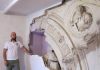



London Auction Will Offer Rare Bronze Cast of Laocoön and His Sons
A life-sized bronze cast of Laocoön and his Sons is set to surface at auction in London this July, marking the first time in 150 years that one of the rare works has appeared in the city’s salerooms. Sotheby’s will present the sculpture on July 1 as a prelude to its Old Masters evening sale, with an estimate of £2 million to £3 million ($2.6 million to $3.9 million).
The cast is one of only four known full-size period bronzes of the celebrated classical group. Its subject traces back to the marble discovered in 1506 on Rome’s Esquiline Hill, a find that Michelangelo examined on behalf of Pope Julius II and reportedly described as “a singular miracle of art.” The ancient work, which depicts the Trojan priest Laocoön and his sons struggling against sea snakes, became one of the most influential images of antiquity in the Renaissance imagination.
This bronze was cast in 1817 by Auguste-Jean Marie Carbonneaux, following a £2,000 commission from the British collector George Watson-Taylor. Carbonneaux’s version was more than an exercise in neoclassical taste. It also reflected a technical advance: he used sand as the mold material, a method that allowed for larger and more intricate bronzes than the older lost-wax process. The sculpture’s extended limbs and coiling snakes made it a demanding feat of casting, and its survival underscores the ambition of the project.
Christopher Mason, Sotheby’s European head of sculpture and works of art, said the bronze represents “a wonderful Napoleonic moment that will never be replicated,” noting that contemporary drawings show the original as a centerpiece of Napoleon’s museum in Paris. The work’s early history is equally dramatic. After Watson-Taylor fell into financial difficulty, the bronze was sold at Phillips on New Bond Street in 1821 and began a long passage through major British collections.
William Beckford acquired it first, paying £400. It later passed to the Duke of Buckingham and Chandos, then to the Duke of Hamilton, before entering the Guest family collection. Of the other surviving full-size period bronzes, one is held by the French Parliament and another at Houghton Hall in Norfolk.
For collectors, the sale offers a convergence of rarity, provenance, and technical history — the kind of object that links the ancient world to the ambitions of 19th-century bronze casting.