


Penn Museum to Auction Rediscovered Osman Hamdi Bey Painting at Bonhams, Citing Collections-Care Endowment
A nearly seven-foot-tall painting by Ottoman artist Osman Hamdi Bey (Turkish, 1842–1910) is set to headline a major London sale this month — and its path to the auction block is already stirring debate about what, exactly, museums owe the public when an object sits in a gray zone of ownership.
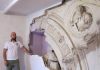
The Penn Museum, located on the University of Pennsylvania campus in Philadelphia, has consigned Bey’s “Cami Kapisinda (At the Mosque Door)” (1891) to Bonhams. The work will lead the auction house’s 19th-century paintings and British Impressionist art sale on March 25 in London, carrying an estimate of £2 to £3 million ($2.7 to $4 million).
Penn Museum officials have said the proceeds will be used to establish a permanent endowment dedicated to the long-term care of the institution’s holdings, which span roughly 10,000 years and include material from Africa, ancient Egypt and Nubia, Asia, the Eastern Mediterranean, Europe, Mexico and Central America, the Middle East, and Indigenous communities in North America.
The sale arrives amid heightened scrutiny of how financially pressured universities handle cultural assets. In recent years, several American colleges have faced backlash after closing museums or selling artworks to address budget shortfalls, moves that can alienate donors and campus communities. Professional bodies including the Association of Art Museum Directors (AAMD), the American Alliance of Museums (AAM), and the Association of Academic Museums and Galleries (AAMG) generally restrict museums from using proceeds from art sales for anything other than new acquisitions or direct care of collections.
Penn’s case hinges on a technicality: “At the Mosque Door” was never formally accessioned, meaning it was not added to the museum’s collection through the standard process that typically triggers deaccessioning rules and oversight. That distinction, critics argue, may allow an institution to sidestep the norms designed to protect public trust.
The painting’s own history at Penn is unusually fraught. The museum purchased it directly from Bey in 1895 for 6,000 francs — a significant sum at the time — but, according to Emily Neumeier, an assistant professor of art history at Philadelphia’s Tyler University who specializes in the Ottoman Empire, the canvas was then literally rolled up and placed in storage. While scholars knew the work existed, Neumeier has said its whereabouts were listed as unknown in multiple publications, including a comprehensive catalogue of the artist’s output. The painting was rediscovered only in 2007, after which the university brought Neumeier on to research its provenance and institutional history.
Bonhams has previously demonstrated strong demand for Bey’s work. In 2019, the artist’s “Young Woman Reading” (1880) exceeded expectations, selling for £6.6 million ($7.8 million) after carrying a high estimate under $1 million, setting an auction record for Bey. Art market analytics firm ARTDAI has reported that only two other Bey paintings have sold for more than $4 million — the top end of the estimate range for “At the Mosque Door.”
The consignment also lands as the University of Pennsylvania navigates broader financial pressures. In February 2025, the National Institutes of Health implemented funding cuts that were expected to cost the university about $240 million, prompting threats to hundreds of jobs and reductions in graduate program cohort sizes.
Some scholars see the Penn sale as a flashpoint for a larger policy conversation. Christiane Gruber, a professor of Islamic art at the University of Michigan, warned that unaccessioned objects can fall outside the public scrutiny that typically accompanies deaccession decisions. “The nebulousness allows a lack of public scrutiny and accountability,” she said in an email.
Neumeier, who helped reconstruct the painting’s story after its rediscovery, also expressed disappointment, calling the sale “a shame and a missed opportunity” in an email.
The Penn Museum declined an interview request.
As “At the Mosque Door” heads to Bonhams, the auction will test not only the market’s appetite for Bey’s meticulously staged, historically charged scenes, but also how museums and universities justify monetizing works that sit just beyond the formal boundaries of a collection — even when the stated goal is long-term stewardship.