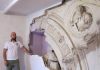



Venezuela’s Earthquakes Leave Colonial Heritage in Crisis
The June 24 earthquakes that killed more than 3,000 people in Venezuela also tore through the country’s architectural memory. More than 58,000 buildings were destroyed, including hospitals, infrastructure, and a long list of historic structures in Caracas, La Guaira, and nearby towns. In the hardest-hit coastal corridor, experts say the damage to churches, seminary buildings, forts, and colonial houses may prove as consequential as the visible collapse of walls and façades.
Archaeologist José Miguel Pérez-Gómez, an associate researcher at Simón Bolívar University, said the narrow strip of land between the Caribbean and the mountains made La Guaira especially vulnerable. “When the earthquakes hit, the seismic waves bounced back and forth from the Caribbean to the mountains,” he said. The city, founded in the late 16th century as the port of Caracas, was fortified in the 18th century and added to Unesco’s World Heritage tentative list in 1999 because of its colonial fabric.
Among the buildings now demanding urgent attention is Casa Guipuzcoana, the former headquarters of the Spanish company that established a trade monopoly in 1728. Pérez-Gómez said it should be placed immediately in the post-earthquake emergency inventory for inspection, with attention to cracks, roof movement, timber damage, wall displacement, and risks to collections or archival material. He also warned that historic and religious structures already weakened by humidity, age, and neglect need rapid technical review.
Reports from Catholic relief organisations and Vatican News indicate that the San Pedro Apóstol Diocesan Seminary in La Guaira suffered major structural damage, with many walls collapsing and clergy and seminarians forced to evacuate. Other losses include the near-total collapse of the façade of the San Sebastián de Maiquetía Church, damage to the San Pedro Apóstol Cathedral and the Ermita del Carmen, and harm to Nuestra Señora de la Candelaria Church in Tarmas, a national monument. In Macuto, the Hotel Miramar partially collapsed, while Quinta Azuleja and La Cuchilla fort also sustained damage.
The destruction reaches beyond one city. In Caracas, the Metropolitan Cathedral was damaged, along with a dozen other parishes in the earthquake zone. The roof of the right nave of the Church of San José de Ñauralí collapsed, as did the Church and Parish House of Pagüita. Pérez-Gómez said little is known about the condition of Coro and its port, another Unesco World Heritage site near the epicenter.
For Abílio José De Oliveira Simao, president of the Ibero-American Institute of Advanced Studies in Heritage, Tourism and Environment, the disaster exposes a deeper failure. He said Venezuela lacks an effective public policy for protecting cultural heritage, even though earthquake risk has long been known. The result, he suggested, is a preventable loss that now demands not only emergency repairs, but a more durable conservation strategy.