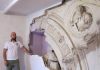



Antonio Homem, Key Steward of Ileana and Michael Sonnabend’s Collection, Dies at 86
Antonio Homem, the longtime collaborator of influential dealer Ileana Sonnabend and a central figure in preserving the legacy of her and her husband, Michael Sonnabend, has died at the age of 86. The announcement was made by Sonnabend Collection Mantova, the museum in northern Italy that Homem helped open in 2025.
Homem’s career traced the arc of postwar contemporary art as it moved from European avant-garde circles to the commercial and institutional mainstream. Born in Portugal in 1939, he relocated to Switzerland as a teenager and studied engineering. His path shifted decisively after he met Sonnabend, who persuaded him to join her Paris gallery in 1968.
In an interview recorded for the Smithsonian Archives of American Art, Homem described the Sonnabends’ personal and professional impact on his life. “I must say that Ileana and Michael were very much the real parents for me, in the sense that they did show me what I wanted and what I could be,” he said. In the same interview, he framed the collection not as a ledger of purchases but as a lived record: “I always said that the collection was an autobiography and an auto-portrait of Ileana, for Michael, for me… a work is just not something one bought for a certain amount at the moment; it’s a kind of distillation of our lives, of years of our lives.”
Homem played a pivotal role in expanding Sonnabend’s reach in the United States, helping to open her New York gallery in 1971 as SoHo was beginning to cohere into a new center of contemporary art. Sonnabend’s operation shared a building with dealers Leo Castelli, John Weber, and André Emmerich, placing it at the heart of a scene that would define the market and critical reception for generations of artists.
Sonnabend remained a formidable presence as the gallery later moved to Chelsea in 2000. After her death in 2007 at age 92, Homem assumed leadership as director. Two years later, in 2009, he established the Sonnabend Collection Foundation, formalizing the stewardship of a collection closely associated with the Sonnabends’ championing of major postwar figures.
The holdings encompass a wide roster of artists who shaped the second half of the 20th century, including Jasper Johns, Anselm Kiefer, Jannis Kounellis, Roy Lichtenstein, Sol LeWitt, Bruce Nauman, Michelangelo Pistoletto, Robert Rauschenberg, Mario Schifano, and Andy Warhol, among others.
Homem’s most recent public milestone came in the fall of 2025, when he helped open Sonnabend Collection Mantova in restored spaces within the Palazzo della Ragione, a medieval palace in the center of Mantova. The museum’s highlights include Johns’s “Figure 8” (1958), Lichtenstein’s “Little Aloha” (1962), and Rauschenberg’s “Kite” (1963), alongside an installation of Warhol’s “Screen Tests” (1964–66).
In a tribute, Mario Codognato, director of Sonnabend Collection Mantova, credited Homem with safeguarding the Sonnabends’ impact on the field. “Antonio has intelligently and sensitively preserved and transmitted the cultural legacy of Ileana and Michael Sonnabend,” Codognato said, adding that his death “leaves a great void in the international art community.”
Homem’s legacy is inseparable from the collection he helped shape and protect: a map of postwar ambition, risk, and conviction, and a reminder that the art world’s most enduring institutions are often built as much through quiet stewardship as through public spectacle.